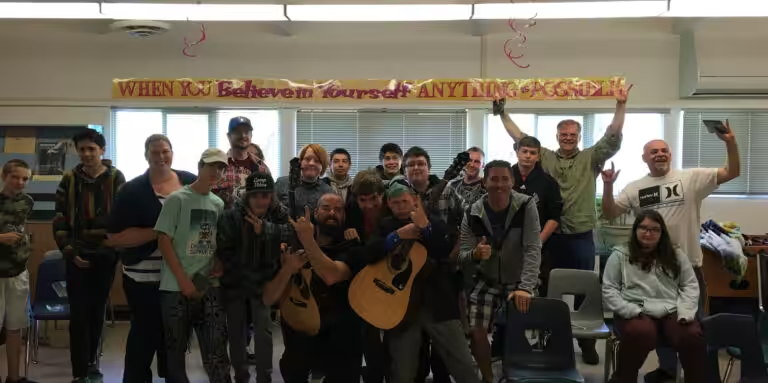
Empower Through Music was born from a simple but urgent belief: every young person deserves access to music—not just as an activity, but as a pathway to confidence, connection, and belonging. For too long, music education has relied on one-size-fits-all models: one teacher, thirty students, one method book, one pace. That structure works for some. …

Empower Through Music was born from a simple but urgent belief: every young person deserves access to music—not just as an activity, but as a pathway to confidence, connection, and belonging.
For too long, music education has relied on one-size-fits-all models: one teacher, thirty students, one method book, one pace. That structure works for some. It does not work for many—especially the youth we serve.
When we began working with at-risk, marginalized, and neurodivergent youth, one thing became clear: the challenge was never that these students couldn’t thrive in music. The challenge was that music education hadn’t been designed to truly meet them where they are.
Our Vision: A Repeatable System That Honors Individuality
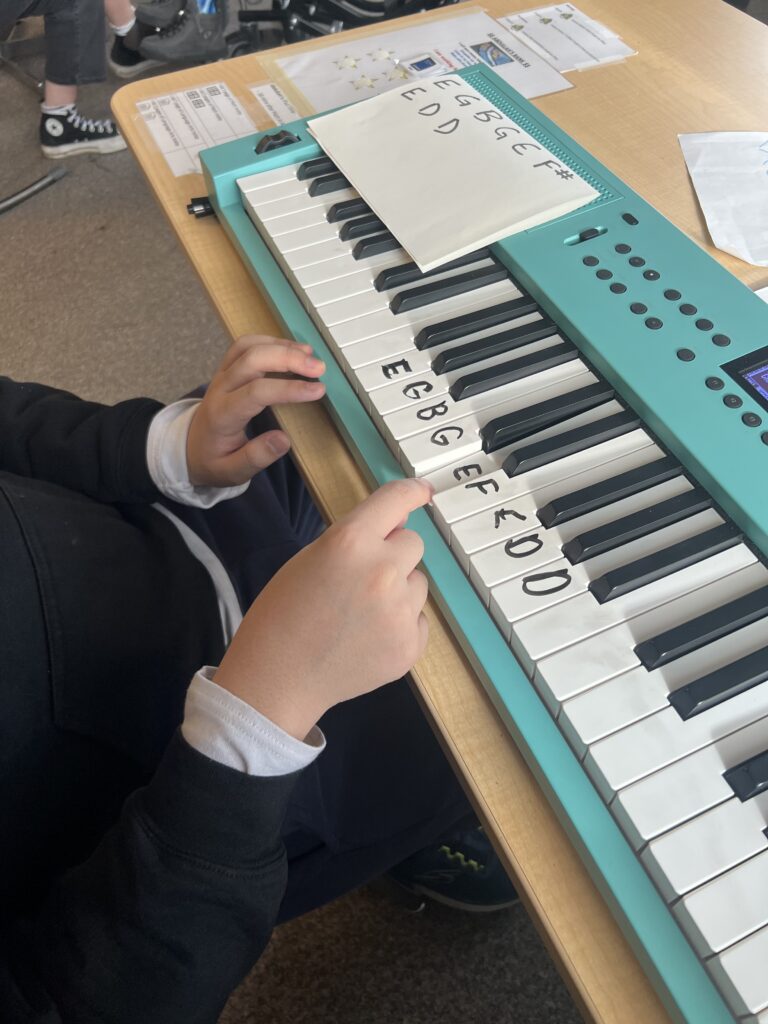
We built a program that respects each learner’s needs and strengths. Through our NeuroHarmony approach, we combine the structure of small-cohort learning with deeply personalized guidance.
Our educators and music therapists take time to understand each student’s:
- strengths and learning style
- sensory needs
- musical tastes
- communication style
- goals and motivators
Then we weave that into an ongoing program that feels safe, inspiring, and achievable.
This isn’t chaos. It’s structured flexibility. It’s organized empathy. It’s modern music education designed for real human diversity.
The Results Are Visible
Students begin to walk a little taller.
They smile a little brighter.
They speak up more confidently.
They feel part of something.
Parents tell us they see growth in resilience and language. Educators observe improved focus and social connection. Most importantly, young people begin to see themselves differently—not as problems to manage, but as creators with something valuable to express.
After more than 35 years as a professional music educator working with thousands of youth, I can say this with conviction: the method is timeless, but the moment is urgent.
We are raising a generation navigating digital overload, isolation, and increasing disconnection. For neurodivergent youth in particular, the gap between potential and support can feel overwhelming. The arts—and music in particular—nurture the brain, regulate emotion, strengthen executive function, and create authentic community.
The Future of Music Education Must Be Inclusive by Design
- It must be relational, not transactional.
- It must balance structure with personalization.
- It must treat creativity as essential, not optional.
We are building that future now.
- To educators: we invite collaboration.
- To parents: we offer partnership and hope.
- To neurodivergent youth and underserved communities: we say this clearly—you belong here.
Music is not a privilege for the few. It is a language every human being is capable of speaking.
And when given the right environment, every young person can find their voice.
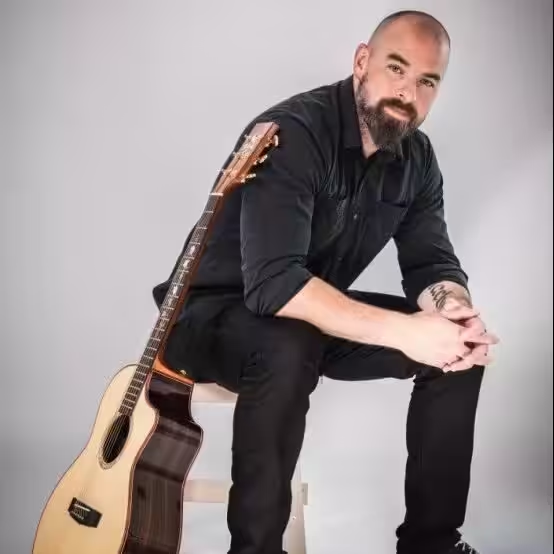
Kris Schulz – Founder